Author: Clare

  • Four Funerals and a Wedding

    Four Funerals and a Wedding

    People often assume that, as a celebrant, I spend all my time surrounded by flowers, confetti, and love stories — and most of the time, that’s true! I adore helping couples celebrate one of the happiest days of their lives. But recently, something a little unexpected happened in that I was asked to facilitate four funerals in a row, before heading straight into my next wedding.

    It was quite a shift — from grief to joy, from reflection to celebration — and it reminded me why I love this work so deeply. Every ceremony, whether it’s a farewell or a beginning, is about honouring life. The tone may change, but the heart of it is the same: helping people find meaning in the moment, words that feel true, and a ceremony that feels right.

    Those four funerals reminded me that every goodbye deserves the same care and authenticity as a wedding day. Each person had a story to tell, and it was a privilege to help their families tell it. I learned about lives well-lived, love shared, quirks and humour, and the small, beautiful details that make someone unforgettable.

    My next clients were a couple getting ready to say “I do” — and it struck me again how closely love and loss sit together. Both bring people together, both ask us to pause and reflect, both are moments of transformation.

    So while most people know me for weddings, I also offer funeral and memorial ceremonies — crafted with the same warmth, care, and personal touch.

    If you’re looking for someone to help tell a life story — with honesty, understanding and respect, I’d be honoured to help.

  • Should we have a Humanist Wedding?

    Should we have a Humanist Wedding?


    A lot of people when they start thinking about their wedding know straight away that they don’t want to get married in a church. They start thinking about alternatives and many have heard about humanist weddings and humanist celebrants. Although I do marry humanist couples, I am not a member of the humanist society, because I would never pass their very rigorous screening process! Primarily because I am not at all fixed on the idea of there being a God or not a God. 

    As I wrote to a potential client recently, “I am usually quite private about how [God/Spirit/Magick] manifests for me as I do see it as deeply personal and experiential”. There’s no way I could articulate how I arrived at the complex set of beliefs and philosophy that shapes who I am today, let alone expect anyone else to take these on as their own! 

    Humanists are generally sure that there is no God, and prefer to rationalise away any experiences one might have that could lead towards a spiritual belief. I prefer the openness of agnosticism as it allows me to lean into the rituals and ceremonial aspects of my life that work so well to ground me and connect me to the great unknown. 

    If rationalism and logic don’t always work for you you are probably not a humanist. Consider instead creating a bespoke wedding ceremony with an independent celebrant (like me!) who will work with you to create something with depth, meaning, and maybe even a little bit of the mystic!

  • Clare Celebrates 10 Years of Marriage

    Clare Celebrates 10 Years of Marriage

    I was together with my partner Martin for 2 years before we got hitched. He was very serious about me from the start but I was a whimsical singleton at the time and was, for the large part, bemused by Martin’s steadfast intentions! And here we are 12 years on and still holding hands in the supermarket.

    The best thing about my marriage is the sense of camaraderie that we have between us. We are mostly on the same page and moving in the same direction, and that is reaffirming and joyful.

    10 years ago we stood at the front of all the people who love us and declared our vows. We said these special, once-in-a-lifetime words to each other. Words that were risky, and that made us vulnerable. Why ever would we do that? Well I know now, why vows are so important and dare I say, sacred. They validate everything that has come before, the intensity of connection, the development of deep love, the passion, the butterflies. Because over time, when those things become less intense we might wonder if it ever happened, or if it really mattered. 

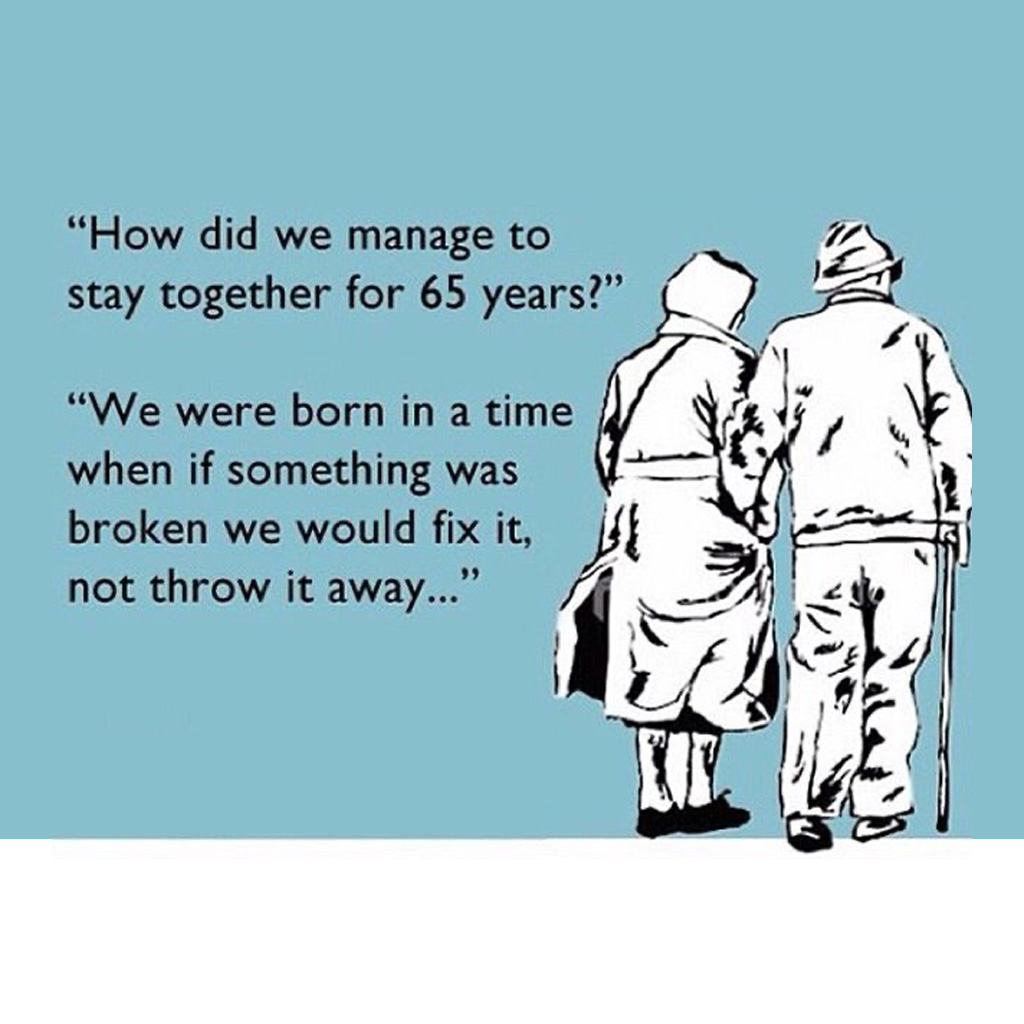
    The ritual creates a point of reference. Particularly in this throw-away culture, with divorce rates higher than ever and young people struggling to find real connections in their dating experiences. Marriage structures love and creates a holding space for us to grow, not just as an individual, but as a person among other persons.

    With this in mind it might just be time to start the next part of your journey. If your partner is kind and reliable, and your friends and family love them too, I would say you’ve found a keeper! 

  • Navigating the not so Christmassy

    Navigating the not so Christmassy

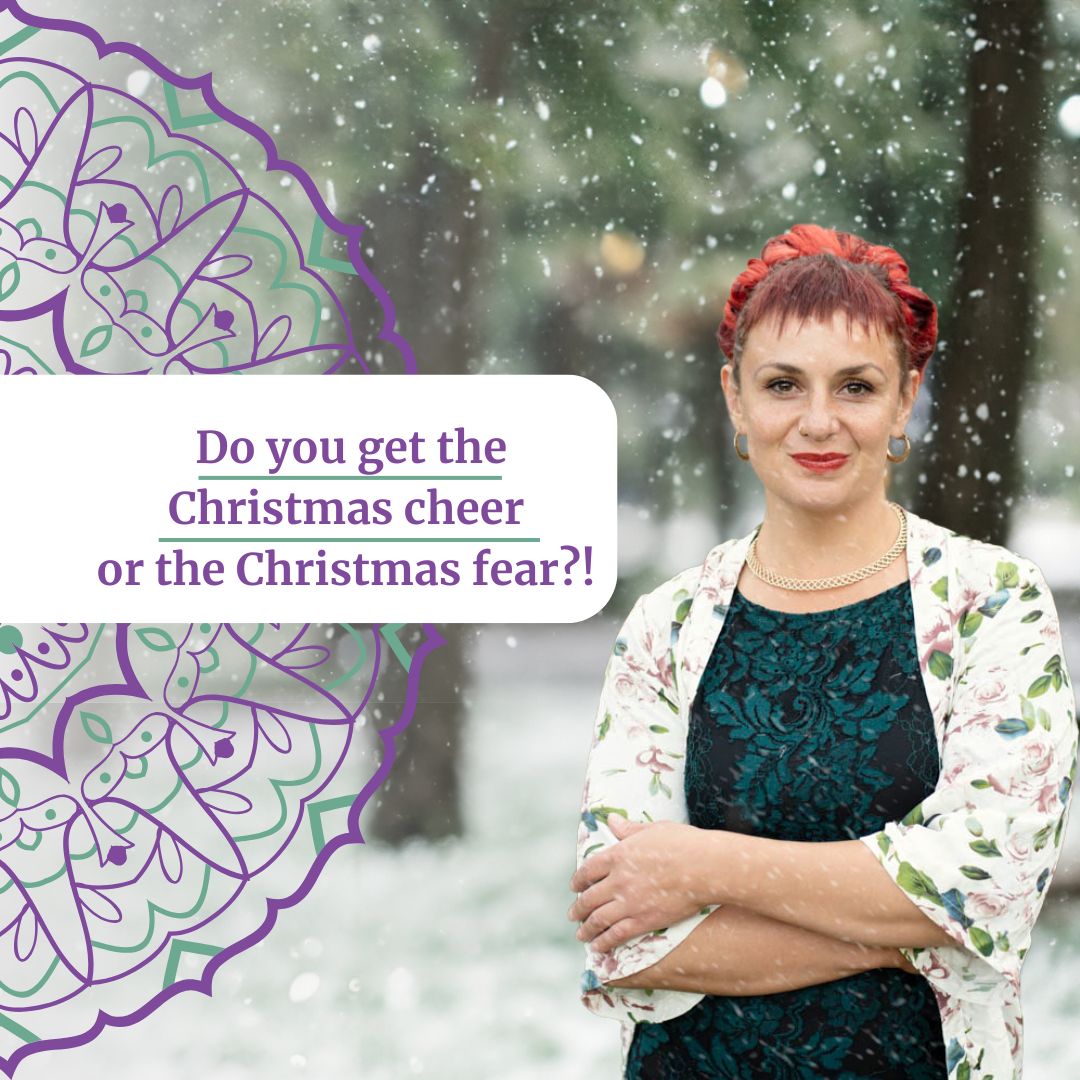
    Do you get the Christmas cheer or the Christmas fear?!

    Christmas is such a lovely holiday but it can also be so stressful! How many of us end up spending time with people that we would usually only tolerate in small doses throughout the rest of the year? In most cases there is an element of obligation involved over the festive season. We buy a gift for our grumpy stepdad and participate in the office secret santa!

    As a celebrant I spend a lot of time thinking about relationships and the dynamics between people. This Christmas if you have to spend time with people that you don’t always gel with, how about balancing out some of your time and energy?

    While the obligation to spend time with family is often that- an obligation and therefore unavoidable, make sure you also plan to spend plenty of time with friends and other like-minded people. It will make the difficult bit more tolerable if you know you have some control over the rest of your time. You could bookend Christmas day with seeing friends on Christmas Eve and spending time doing something for yourself on Boxing Day. Don’t feel guilty about planning it like this; it’s very normal to need time out from the intensity of (what is apparently) the biggest event of the year.

    Christmas for me often feels over-inflated, and like a sort of collective madness has taken over the country! I balance it out by also celebrating Winter Solstice with my friends, which for me holds much more meaning. As much as you can, just opt into the elements of Christmas you actually like, such as having some time off work! Resist the hype if it stresses you out and you too can avoid the Christmas Fear!

    Season’s Greetings to you all XXXXX

  • Clare talks to BBC Radio Bristol!

    Clare talks to BBC Radio Bristol!

    I was declared a Local Expert by John Dervall from BBC Bristol! We talked about the history and origins of the expression ‘tie the knot’.

    Honestly, I really didn’t need much encouragement to chat about one of my favourite subjects! There was so much more I could have said, (but isn’t that just always the way?)

    If you don’t want to (or can’t)  listen to my melodious voice on the radio (what?) then read on as some of my favourite moments are transcribed below.

    BBC Radio Bristol John Darvall with Clare of I Do Declare Celebrant


    Where does this whole ‘tying the knot thing come from?

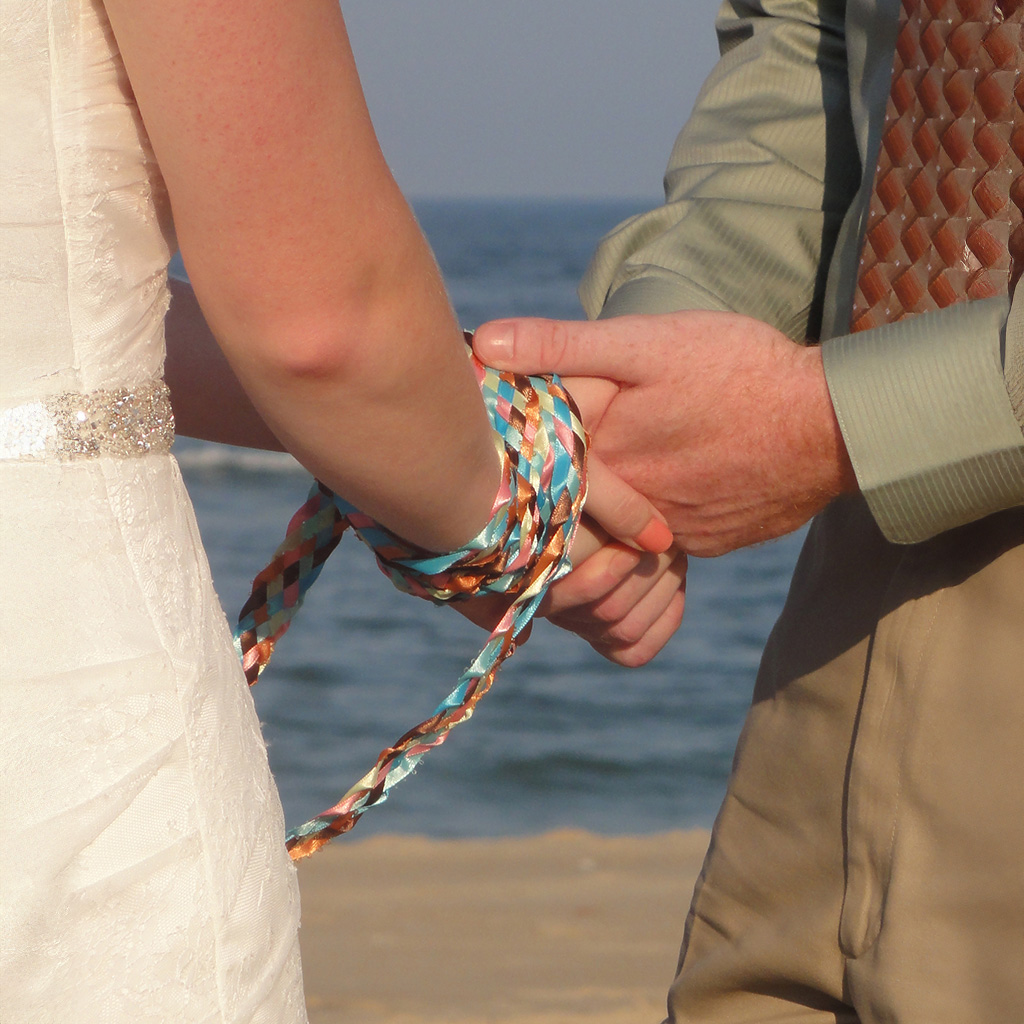
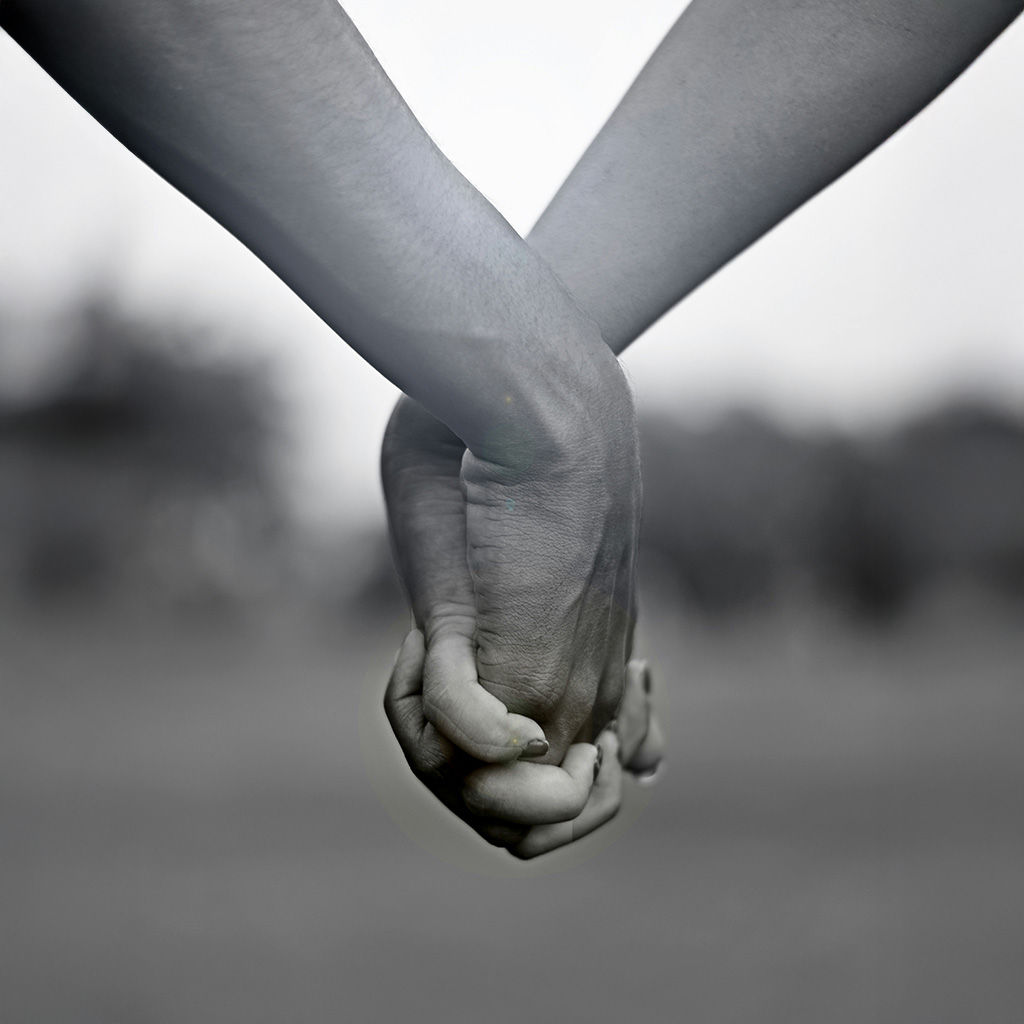
    “It comes from a different kind of wedding ceremony, less commonly known, called a handfasting. The couple’s hands are tied together with a selected cord or ribbon as a symbol of their love and commitment, and the knot that is tied becomes representative of their union.”


    “I have heard that some couples back in the day stayed tied together for the rest of the day, which I think sounds quite fun, a bit like a three legged race but with hands and less racing!”


    “In parts of India they also use the phrase tie the knot, it’s not just in Europe. It’s common in India during a wedding ceremony for the groom to tie a thread around the neck of the bride as a necklace and later the thread is exchanged for a gold necklace.”

    “A knot lends itself really well as a visual symbol of a commitment, something’s been agreed upon, and you can go back and see that it was so.”

    “I do a lot of very interesting, very unique weddings… The couples I work with really find their own path through the ceremony structure and really make it their own.”


    “Thank you so much for joining us, Clare Smith, Independent Celebrant of ‘I Do Declare’ (Love that!) Clare, thank you very much for being our expert!”

    Photo: “Handfasting using a braided cord 2012
    by Susan L. Craig,
    licensed under CC BY-SA 3.0
    via Wikimedia Commons.

  • Many Kinds of Love

    Many Kinds of Love

    When people find out what I do it often sparks a conversation about love and relationships. A surprising number of people open up to me about their personal experience of love while others confess their reservations about marriage and ‘the whole death do we part thing’ (I’m uncomfortable with that too, by the way).

    I have met plenty of couples who think its ‘a bit too late’ to celebrate their relationship. Especially those who have had children or been together for many years without ever celebrating their togetherness. Some have fallen in love, bought a place together, the honeymooning period has passed and they have moved into a new kind of love which almost doesn’t ‘seem worth celebrating’.

    It’s as if the only kind of love that’s worth celebrating is that heady infatuation born on the wings of Eros. But surely this is a dreadful shame, as it undervalues the many types of love that exists between people.

    Why is it that we generally only celebrate this one? Many people do not even experience that intensity in the first place. One wonders to what extent popular culture and the fetishization of love is responsible for the lack of value people seem to place on their own unique experience.

    In a lot of cultures, at the point of marriage it is rarely the love of Eros they are celebrating. In the absence of an existing, loving relationship, the ceremony seems to focus on the years of cooperation and mutuality yet to come.

    It would be difficult to list the many versions of love or affinity that must be out there. It is hard enough for couples to describe it themselves. But I’m in a privileged position with this job since an aspect of what I do is extract the best part of a couple’s dynamic and bring it into light and into ceremony. It’s such a beautiful process.

    Having years of cooperation and reciprocity under your belt really is something to celebrate. If this is you, it’s high time to throw a party, jump the broom or perform a handfasting! Have your children write your vows based on your authentic reality, tell it like it is, and build a fire to acknowledge your fabulous past, present and future.

  • Building a Blessingway

    Building a Blessingway

    Here are some of the steps I usually take when building a Blessingway: 

    Consider the Vibe 

    Depending on the participants you can create a ceremony which is as reverent or casual as you wish. At the last Blessingway I held there were 2 small children playing in the adjoining room, so interruptions were inevitable!  

    The ceremony was very sweet and simple, yet the relationships between the women made the experience feel deep and expansive. Expansive enough for the mother-to-be to well up. She was happy but exhausted, finally settling into her maternity leave and the last 6 weeks before the birth of her third son.  

    It is common that a sense of anticipation builds beforehand and is felt as release when everyone is finally seated together. The mother-to-be experiences the love and trust in the room, and the sense of her ‘handing over’ or surrendering to the ceremony is often almost tangible.   

    Dedicate the Ceremony 

    I love to dedicate each Blessingway I hold to a spirit or entity which matches the mother-to-be. This ceremony was dedicated to Béfind, one of three Celtic fairies who are said to be present at every birth and bestow ‘gifts’ upon the child. Each Blessingway I perform is dedicated differently, depending on the heritage/character/requirements/etc of the mother-to-be.  

    Open the Circle 

    Once all participants are sitting together and are settled I usually open the circle. There are many ways to do this. I usually pay my respects to the four elements, four directions and the four correlating human capacities, (the body, mind, creative will and emotion). Remember to close the circle afterwards. 

    Give Blessings 

    It never ceases to overwhelm me seeing such an outpouring of love, blessings, positivity and inspiration as is bestowed upon the mother-to-be during a Blessingway. This is the true meaning of ‘Baby Shower.’ This most recent mother-to-be was given presents, but her friends also arranged a foot bath for her and her belly was painted. There was singing and hugs and poems. It was so nurturing. 

    Acknowledge the Wonder 

    I think what sets a Blessingway apart from a Baby Shower is that it cultivates a sense of awe around the imminent birth. Despite all our pre-birth planning and preparation, the underlying fact is that birthing a new person into the world is a staggering mystery and miracle. A Blessingway allows for this reality to be a part of the experience, not put aside or overlooked. 

    Acknowledging the wonder (and often the difficulty) of the birthing process gives power to the mother. It attunes her to the intensity of what is to come and gives her the confidence to be present in her body.  

    Allow the Silence 

    So give time for silence, for contemplation and for body. Although we couldn’t meditate for long I gave all participants a walnut, whole and in its shell, to hold and contemplate for a few minutes. The walnut has its own incredible symbolism and history here in the British Isles. But in the context of this Blessingway I love what it represented: The shell, round and impenetrable reminds us of the strength and protective instincts of a mother. Inside, ripening, alive with potentiality, lies the seed. 


    If you (or a friend) are cultivating your own divine seed in the belly(!), why not get in touch? I am an Independent Celebrant who creates and facilitates bespoke ceremonies.  

  • My Witchy Roots

    My Witchy Roots

    I self-initiated into the Wicca tradition on the Spring Equinox of 2005. I was 24 and so excited! I had managed to get hold of a green cloak and had packed my bag the night before. I left before dawn and walked to the nearest green space, which happened to be Alexandra Park in London. If you were walking your dog there that morning you might have spotted a be-dreadlocked young witch singing to herself in the bushes, lavishly scattering a multitude of grains around the place whilst trying to keep a candle alight in the morning dew. 

    I took another leap of allegiance in 2008 when I had the pentacle symbol etched into my thigh through a process known as scarification. I know right?! Intense. It didn’t hurt as much as having a tattoo, surprisingly. So, my witchy roots go deep I guess. I could talk about my dad’s girlfriend during my teenage years, who had a tremendous effect on my expanding spirit. Or my Grandma, who despite being a dutiful church-goer her whole life has a strong intuitive streak. And then there was the tarot deck in the bookcase of my childhood, forbidden to touch, unspoken about, but given freely to me when I asked, as an adult. 

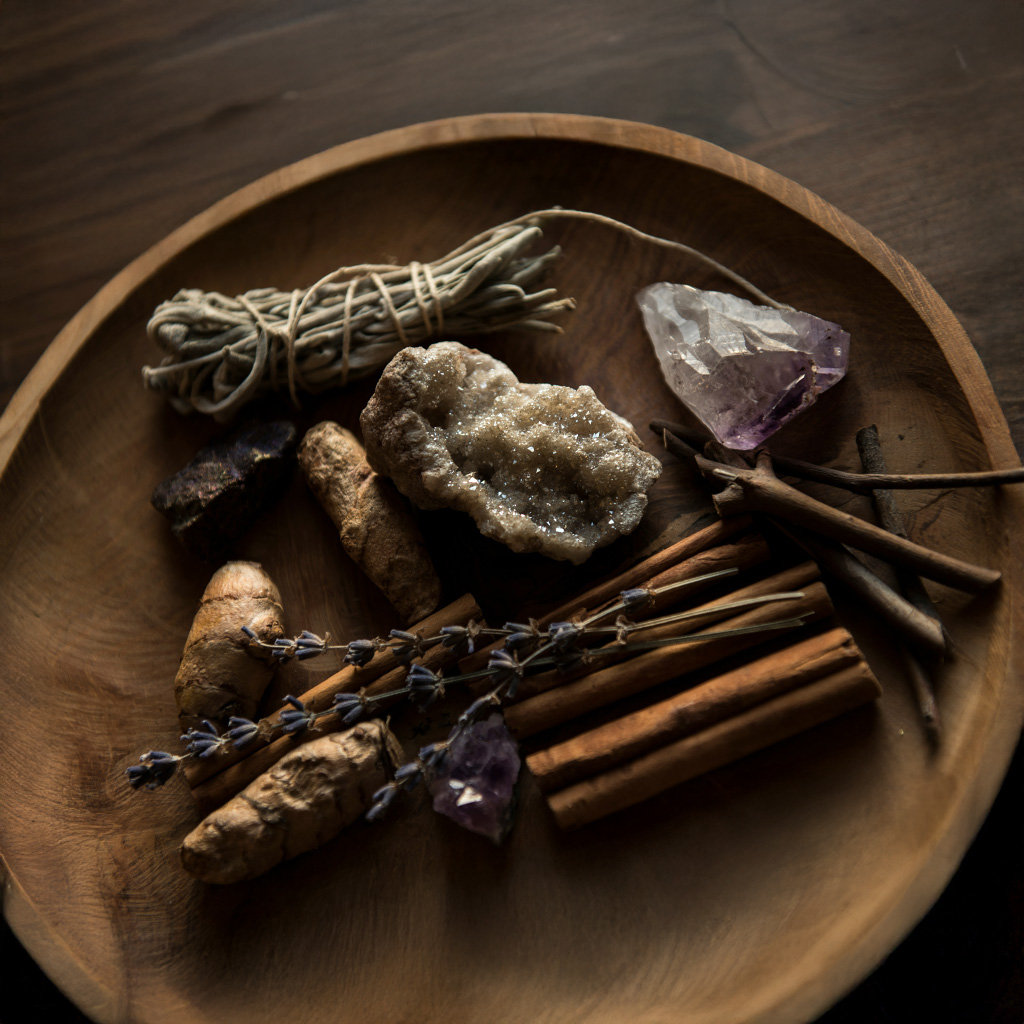
    What does it mean to have witchcraft in my roots? I have at my disposal a wide base of knowledge regarding pagan ritual, rites, traditional and seasonal festivals, dedications, herbs, symbolism and of course the ever enigmatic practice of magick. Not all clients are interested in this, which is fine.  If you are a computer programmer, a chef or an engineer you might never have had any need for such information! But as a ceremony-writer I feel our ancestry and cultural heritage should at the very least influence my work in order for it to be meaningful and evocative. And that is of course why we all opt for ceremonies at various points in our lives: We want meaning, we want connection, we want depth. And I love this about all people, whether they have their own witchy roots or not.  

  • Why I Call Him my Partner not my Husband

    Why I Call Him my Partner not my Husband

     The term husband can be traced back to the Old Nordic hūsbōndi which means the house-dweller, owner or manager. The term wife originates from the old German ‘Weiß,’ meaning simply ‘woman’ but it extends out sideways to include other early forms with shameful sexual undertones. Immediately there is a mismatch in status between these two historical words. But it’s not this! This is too abstract to incite my stubborn pedantism alone. 

    IN 2021  I’m in solidarity with my LGBTQ+  friends who, at least in some circumstances, are obliged to take a risk every time they mention their relationship in a new social setting.  Imagine the already daunting task of making small talk with new people but having to avoid pronouns. This is a drop in the ocean of mitigations anyone with non-conventional preferences is required to navigate on a daily basis.  

    And it was only a few decades ago that women going for interviews would be routinely asked if they were married or single, or it could be ascertained simply by looking at their title of Miss or Mrs and the bias would be set from there…. so I’m a Ms (said Mzz) thank you very much and mind your own! 

    Still there is a certain comfort in being called someone’s wife. The sense of belonging is intoxicating, and I’m glad to hear many same-sex couples celebrate that assertion. In truth I don’t personally mind it. But until not an eyelid is bat, until the bitter pill is not only swallowed but tasty, until a person’s sexual preferences are irrelevant, not grinned at or merely bore, I will call him my partner not my husband. And the more of us that are happy to neutralise this loaded denominator and strengthen the cloak of ambiguity for our friends, the better. 

  • Any Om’s a Good Om

    Any Om’s a Good Om

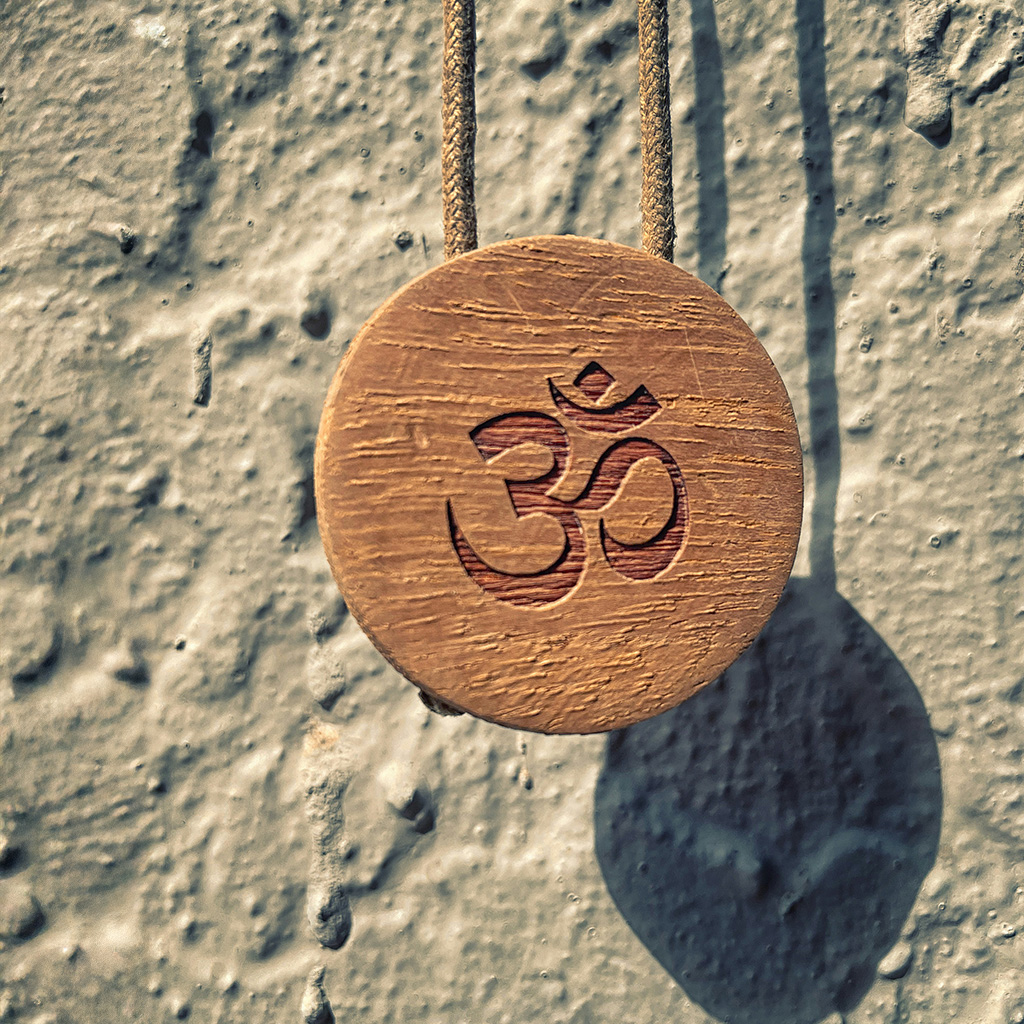
    A good ceremony has a beginning, a middle and an end. It tells a story with intention, direction and meaning. But the human brain is not like this! The mind is erratic and capricious and prefers to follow a constant stream of thoughts. By the time we are adults most of us struggle to bring ourselves into a natural, genuine focus. Needless to say that when I first started facilitating women’s circles I found that we would all enter the circle with such a deluge of racing thoughts. It took us a while for our minds to settle and forget about the commotion of the day. Then we began to use this simple yet powerful word: Om. I was very grateful to discover the concentrating and clearing effects of sounding out just three Oms at the beginning of holding a circle. 

     Om is the most powerful sound I know. Right now across the globe thousands of people are sounding out this ancient mantra, in preparation for prayer or as part of their meditation. I find this alone a very calming thought. It is said that Om is the sound that the Earth makes as it vibrates with all its life and physicality. It is said that Om was the first sound ever to come into the universe. It is said to be the sound of God. A pretty big reputation!  

    Any Om is a good Om because, like singing, it creates a point of focus and lowers the activity in the brain. Further than that, the vibrations are so good for your body! You will feel the ‘ooo’ (pronounced more like ‘ah’) sound in your chest and throat, and when you change to ‘mmm’ the vibrations move up to your head.  If you feel self-conscious trying it for the first time, find a time and place to practice uninhibited. The more relaxed and open your throat is the deeper your tone will be, and you may even meet your inner Buddhist monk! Go loud and long if you can. Try a minimum of three, or go for 108! (Believed to be the optimal number for sinking into a deep state of relaxation). You’ll love it. You will notice your mind is clearer and your concentration improved.