Category: Ceremonies

  • Clare talks to BBC Radio Bristol!

    Clare talks to BBC Radio Bristol!

    I was declared a Local Expert by John Dervall from BBC Bristol! We talked about the history and origins of the expression ‘tie the knot’.

    Honestly, I really didn’t need much encouragement to chat about one of my favourite subjects! There was so much more I could have said, (but isn’t that just always the way?)

    If you don’t want to (or can’t)  listen to my melodious voice on the radio (what?) then read on as some of my favourite moments are transcribed below.

    BBC Radio Bristol John Darvall with Clare of I Do Declare Celebrant


    Where does this whole ‘tying the knot thing come from?

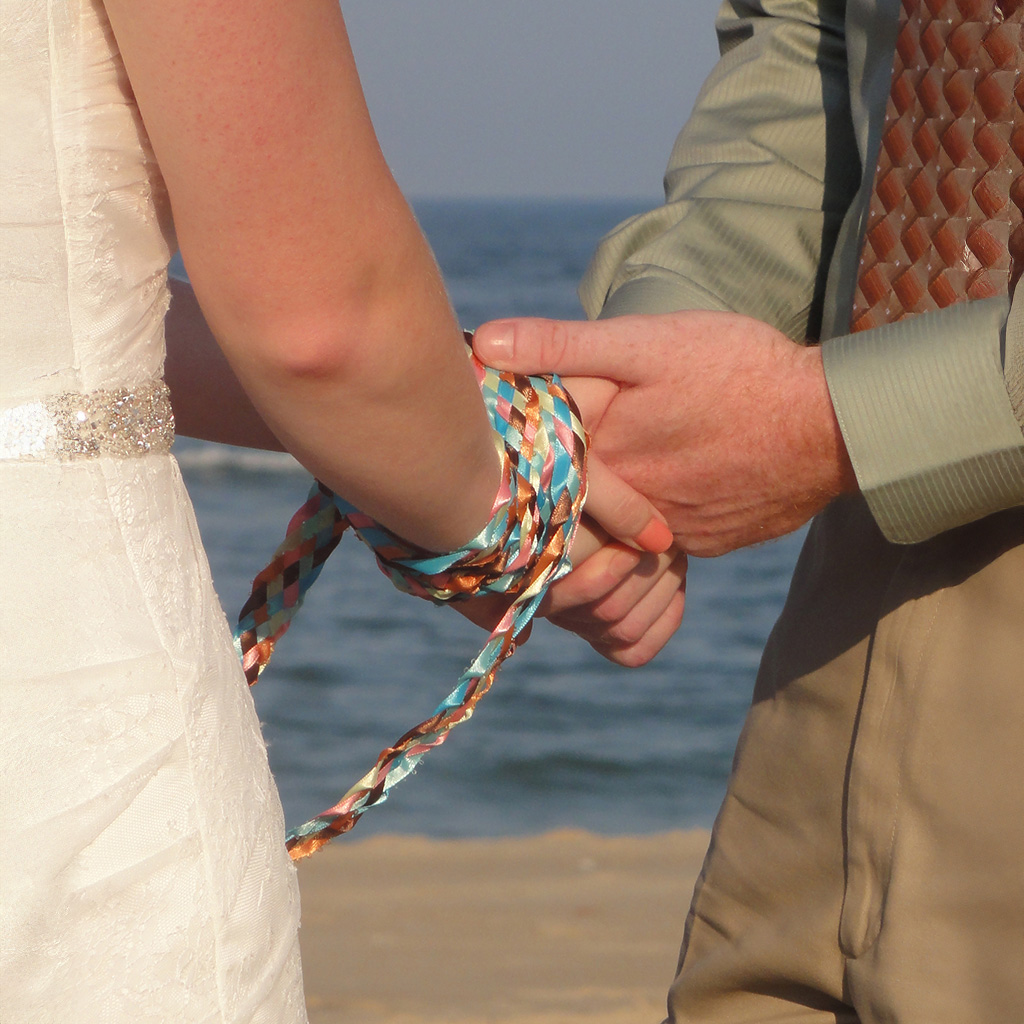
    “It comes from a different kind of wedding ceremony, less commonly known, called a handfasting. The couple’s hands are tied together with a selected cord or ribbon as a symbol of their love and commitment, and the knot that is tied becomes representative of their union.”


    “I have heard that some couples back in the day stayed tied together for the rest of the day, which I think sounds quite fun, a bit like a three legged race but with hands and less racing!”


    “In parts of India they also use the phrase tie the knot, it’s not just in Europe. It’s common in India during a wedding ceremony for the groom to tie a thread around the neck of the bride as a necklace and later the thread is exchanged for a gold necklace.”

    “A knot lends itself really well as a visual symbol of a commitment, something’s been agreed upon, and you can go back and see that it was so.”

    “I do a lot of very interesting, very unique weddings… The couples I work with really find their own path through the ceremony structure and really make it their own.”


    “Thank you so much for joining us, Clare Smith, Independent Celebrant of ‘I Do Declare’ (Love that!) Clare, thank you very much for being our expert!”

    Photo: “Handfasting using a braided cord 2012
    by Susan L. Craig,
    licensed under CC BY-SA 3.0
    via Wikimedia Commons.
  • My Witchy Roots

    My Witchy Roots

    I self-initiated into the Wicca tradition on the Spring Equinox of 2005. I was 24 and so excited! I had managed to get hold of a green cloak and had packed my bag the night before. I left before dawn and walked to the nearest green space, which happened to be Alexandra Park in London. If you were walking your dog there that morning you might have spotted a be-dreadlocked young witch singing to herself in the bushes, lavishly scattering a multitude of grains around the place whilst trying to keep a candle alight in the morning dew. 

    I took another leap of allegiance in 2008 when I had the pentacle symbol etched into my thigh through a process known as scarification. I know right?! Intense. It didn’t hurt as much as having a tattoo, surprisingly. So, my witchy roots go deep I guess. I could talk about my dad’s girlfriend during my teenage years, who had a tremendous effect on my expanding spirit. Or my Grandma, who despite being a dutiful church-goer her whole life has a strong intuitive streak. And then there was the tarot deck in the bookcase of my childhood, forbidden to touch, unspoken about, but given freely to me when I asked, as an adult. 

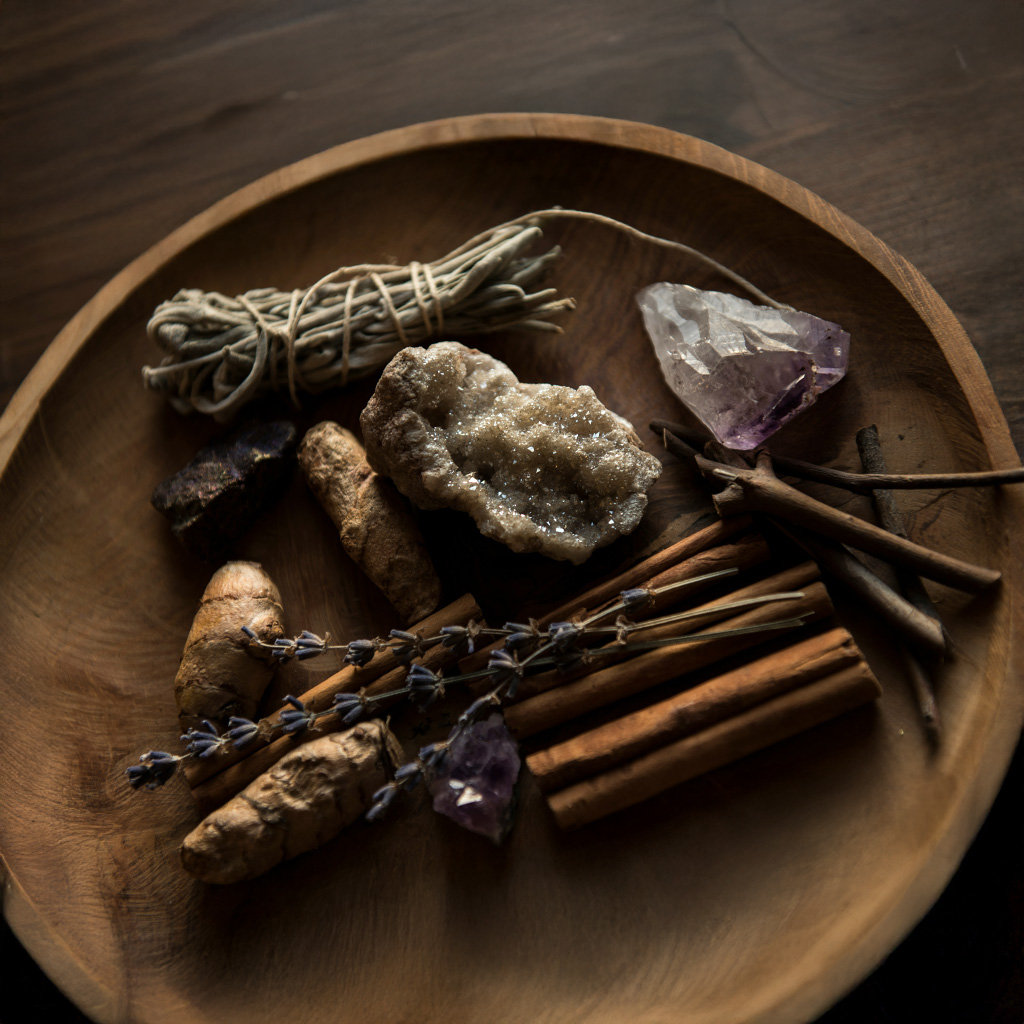
    What does it mean to have witchcraft in my roots? I have at my disposal a wide base of knowledge regarding pagan ritual, rites, traditional and seasonal festivals, dedications, herbs, symbolism and of course the ever enigmatic practice of magick. Not all clients are interested in this, which is fine.  If you are a computer programmer, a chef or an engineer you might never have had any need for such information! But as a ceremony-writer I feel our ancestry and cultural heritage should at the very least influence my work in order for it to be meaningful and evocative. And that is of course why we all opt for ceremonies at various points in our lives: We want meaning, we want connection, we want depth. And I love this about all people, whether they have their own witchy roots or not.  

  • Ceremony as Therapy

    Ceremony as Therapy

    I used to work for an incredible organisation called The Nelson Trust. I worked supporting women with addictions and those involved in the criminal justice system. These were women who had, in many cases been given a bad hand in life, experiencing trauma or abuse at a young age, and for various reasons found substance or alcohol use as their primary coping strategy. Then they got lost in that life-destroying cycle. Their road to recovery was one of the most profound processes I have ever had the privilege to witness.  

    One time a young woman came into our treatment centre close to the 1 year anniversary of her sister’s death. She was in extreme mental turmoil and deeply uncomfortable at facing this day sober. Being new to the group she had yet to develop the friendships and support of the women around her. On the morning of the anniversary the two of us sat in the garden of the house and lit a candle. There is a brook that runs along the edge of the garden and we could hear it babble. The birds were singing. I knew there were few words that could be said to alleviate the woman’s pain. But the act of sitting with a candle transcended words. 

    There are other ceremonies and rituals that are incorporated into therapy. I helped a former sex worker say goodbye to her alias through a ceremony which involved writing a letter and burning it. ‘Cathartic’ means ‘involving the release of strong emotions through a particular activity or experience’.  Ceremony is often carthartic and healing. It is most powerful when witnessed by others. Our intentions, commitments and vows are not only heard, but they are held and anchored by those witnesses.  

    Therefore, the therapeutic power of Ceremony can nurture a confidence and resilience when nervousness or doubt creeps in. Ceremony helps us to accept changes that are already happening and can prepare us for changes still to come. Ceremony is therapeutic. It is healthy, vitalising and beautiful.